
Hip and groin pain in Hornsby
%20(1).svg)
.svg)

Hip and groin pain in Hornsby
Hip and groin pain can affect everything from running around Hornsby Park to getting in and out of the car, sitting at work or sleeping comfortably. Many people look for hip pain physio support when discomfort starts to interfere with walking, stairs, sport or daily tasks.
Groin strains from running or sport and hip osteoarthritis are two common causes of symptoms in this area. Early guidance from a physio who specialises in groin strain or hip osteoarthritis treatment may help clarify what is going on, adjust activity and plan a gradual return towards the things that matter to you.

What is hip and groin pain?
Hip and groin pain refers to discomfort felt around the ball-and-socket hip joint, the front or side of the hip, the buttock or the crease where the thigh meets the pelvis. It can arise from muscles, tendons, joints, cartilage or referred symptoms from nearby regions such as the lower back or pelvis.
Common issues include groin muscle strains (often related to sudden changes of direction or running loads), hip joint conditions such as hip osteoarthritis where joint cartilage gradually changes over time, and running-related hip pain from overload, biomechanical factors or conditions like femoroacetabular impingement (FAI).
Causes, contributors and symptoms
Groin strains often involve the adductor muscles on the inside of the thigh and may present with sharp pain in the groin during sprinting, kicking or changing direction, discomfort when bringing the legs together or stretching the inner thigh, and local tenderness, sometimes with bruising in more acute strains.
Hip osteoarthritis typically develops gradually and may involve a deep ache in the groin, buttock or side of the hip, stiffness after sitting or first thing in the morning that eases with gentle movement, pain with walking, stairs, putting on shoes or getting in and out of a car, and reduced hip movement such as difficulty crossing legs or bending to the floor.
Running-related hip and groin pain may be linked to sudden increases in training volume, speed or hills, biomechanical factors such as reduced hip strength or control, and footwear or surface changes. In many cases, symptoms result from a mix of joint, muscle and tendon factors, plus how load is managed over time, so individual assessment is important.
Red flags – when to see a GP or emergency department
Most hip and groin presentations can be assessed in an allied health clinic, but some signs warrant prompt medical review, including sudden inability to weight-bear after a fall or trauma, severe unrelenting pain (especially at night) that does not ease with rest, fever or feeling unwell with a very hot, swollen joint, and recent significant weight loss or night sweats. If any of these are present, seeing your GP or local emergency department is recommended.
How Hornsby Health clinicians assess hip and groin pain
Our clinicians at Hornsby Health may begin by asking detailed questions about where you feel the pain, how it started, whether it came on suddenly or gradually, and how it behaves with walking, sitting, stairs, running or sport. They may also ask about previous injuries, general health, medications and what you want to get back to doing.
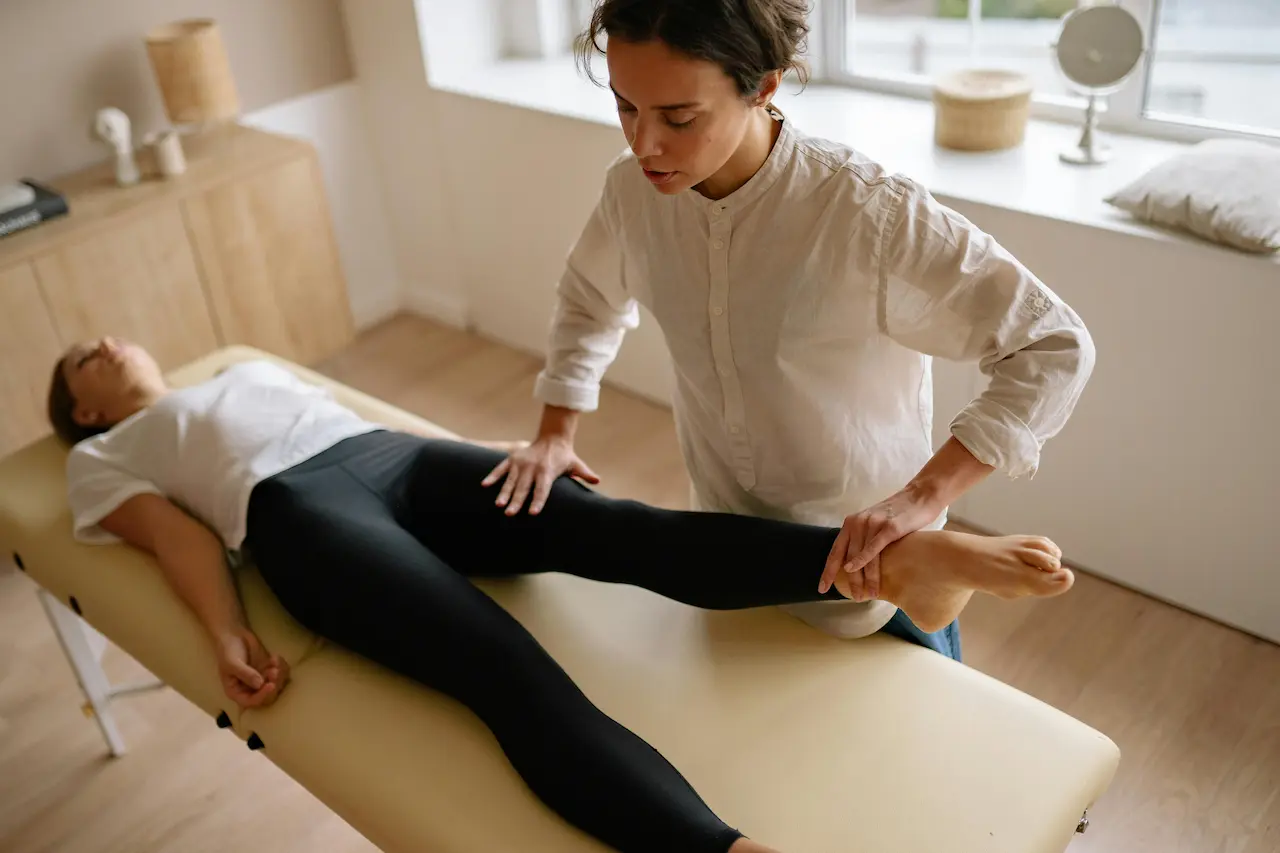
A physical examination often looks at posture and standing alignment of the hips, knees and feet, hip range of motion, muscle strength around the hips, pelvis and core, specific tests for hip joint irritability, groin muscle strain and related conditions, and functional tasks such as sit-to-stand, stairs, walking or running drills when appropriate. Physiotherapists may coordinate assessment and rehab, chiropractors may contribute with joint and spinal assessment where suitable, and exercise physiologists may help with longer-term strength and conditioning, weight management or return-to-running programs.
Imaging such as X-rays, ultrasound or MRI is not always required for hip and groin pain. It may be considered through your GP if there is suspicion of significant joint change, stress fracture, referred pain from other structures, or if symptoms are not following an expected pattern despite appropriate care.
Treatment and management options in Hornsby
Management is usually tailored to your diagnosis, goals and overall health. At Hornsby Health, treatment for hip pain may combine education, exercise, load management and, where appropriate, hands-on care or external supports.
Education and load management
Understanding your condition and how load affects symptoms is a key starting point. Many people find it helpful to learn how to adjust walking, running or standing time to reduce flare-ups, modify hills, speed or distance if running-related pain is present, and pace household or work tasks to avoid doing all heavier activities on the same day. For hip osteoarthritis, advice may include strategies for sitting, standing and sleeping positions, pacing daily steps, and considering assistive devices through your GP or other providers if needed.
Exercise and rehabilitation
Exercise is often central to care for groin strains, running-related hip pain and hip osteoarthritis. Programs are usually progressed over time and may involve strengthening for hip, gluteal and core muscles to support the joint, adductor (groin) strengthening and control exercises after strain using graded progressions, range-of-movement exercises to help maintain or improve hip flexibility, and balance and control work to support running and change-of-direction tasks. Guidance for hip osteoarthritis often emphasises strengthening, mobility and low-impact aerobic activity such as walking, cycling or swimming, according to tolerance.

Hands-on treatment options
Some people feel hands-on care is a useful adjunct, especially early in their recovery. Depending on your presentation and preferences, the Hornsby Health clinicians may offer soft tissue techniques for hip, gluteal or groin muscles, gentle joint mobilisation through the hip, pelvis or lumbar spine where appropriate, and guidance on comfortable positions and movement strategies. Hands-on approaches are generally combined with exercise and load management rather than used alone.
Self-management, lifestyle and adjuncts
Self-management strategies may include simple home routines to warm up the hip before activity, advice on gradual weight management where this is relevant for hip osteoarthritis in consultation with your broader healthcare team, and suggestions around lower-impact activity options while pain is more sensitive. Depending on your situation, clinicians may suggest discussing pain relief options with your GP or pharmacist, particularly during flare-ups. Cold or heat packs can be helpful for some people as part of broader management.

When referral is appropriate
Referral to a GP, sports physician or orthopaedic specialist may be recommended if pain is severe, progressive or not improving with appropriate conservative care, there is concern about significant hip joint change, stress fracture or other pathology, or invasive options such as injections or surgery need to be considered as part of an overall plan. Any such decisions are individual and usually follow a period of structured non-surgical management.
Common questions about hip and groin pain in Hornsby
Is all groin pain from a muscle strain?
No. While groin muscle strains are common, groin pain can also relate to hip joint issues, FAI, tendon problems, hernias or referred pain from the lower back or pelvis. A thorough assessment is important to clarify likely sources.
Can I keep running with hip or groin pain?
In some cases, modified running can continue, but this depends on the cause and severity of symptoms. Many runners benefit from adjusting distance, speed or hills while strengthening key muscle groups and monitoring pain response, rather than stopping completely. Individual guidance is recommended.
Does hip osteoarthritis always lead to a hip replacement?
Not necessarily. Many people with hip osteoarthritis manage symptoms for long periods with a combination of exercise, education, activity modification and broader health strategies. Surgery is usually considered when pain and function remain significantly limited despite appropriate conservative care.
How long does a groin strain take to heal?
Timeframes vary with the severity of the strain, sport or work demands and how rehab is progressed. Some mild strains may improve over a few weeks, while more significant or longstanding groin problems can take several weeks to months and require structured strengthening and control work.
How many sessions will I need?
The number of sessions depends on your diagnosis, symptom duration, goals and response to treatment. Some people with recent, mild symptoms may need a short block of appointments and a home program, while hip osteoarthritis and more complex running-related hip or groin issues often require longer-term guidance and progression.
Who this may help in Hornsby and nearby suburbs
Assessment and management for hip and groin pain at Hornsby Health may be suitable for adults living or working in Hornsby, Waitara, Asquith, Wahroonga, Thornleigh and Mount Colah. Getting support from a physio who deals with hip pain, groin strain and hip osteoarthritis may be particularly relevant if you experience groin pain with running, change of direction or kicking, notice a deep ache or stiffness in the hip that makes walking, stairs or everyday tasks harder, have been told you have hip osteoarthritis and want to stay as active as is reasonable, are returning to running or field sports after time off and want to manage hip and groin load, or have persistent or recurrent hip or groin symptoms and would like a structured, progressive plan.
Our clinicians at Hornsby Health may work with your specific goals, whether that is keeping up with family life, managing a physically demanding job or returning to recreational or competitive activity around Hornsby.
Next steps
If hip or groin pain is limiting your walking, running, work or daily activities, organising an assessment can be a useful first step. An individualised plan with one of our physios may help you understand your condition, adjust activity and develop an appropriate exercise program over time. If your pain is sudden and severe, follows a fall, or is associated with systemic symptoms such as fever or unexplained weight loss, please seek prompt advice from your GP or local emergency department. For ongoing or gradually worsening hip or groin symptoms, booking with a qualified clinician at Hornsby Health can provide tailored guidance on suitable next steps.
-p-130x130q80.jpg)
.jpg)

Ready to book an appointment with us?
Visit our Online Bookings page where you can see what times are available and book appointments with all our great Physiotherapists, Chiropractors, and Exercise Physiologists in Hornsby. You can also find us and book appointments via HotDoc and HealthEngine.
Rather speak to someone? Simply give us a call on 02 8428 0528 and our friendly receptionists can help you find a time that suits, and answer any questions you might have.


